



At California High School, the week of finals often brings with it a sense of dread. After all, it often symbolizes the final hurdle in locking in the grade you’ve worked so hard for throughout the semester. For many students, the end of the academic season brings to mind long nights of studying, stacks of notes, and a sense of pressure that feels overwhelming in nature. However, finals are much more than just a set of exams at the end of a term. They play a significant role in measuring learning, building discipline, and preparing students for future challenges.
Getting ready for them requires careful planning, excellent time management, and a strong sense of self-regulation. Students must learn how to prioritize tasks, manage stress, and stay focused over an extended period of time to achieve their goals at the end of the day. These skills are not only useful in school, but are essential in any given student’s future career and everyday life. Meeting deadlines, preparing for presentations, and handling pressure are all situations adults regularly face, and finals serve as early and effective training for these responsibilities.
Since finals bring with them real academic responsibilities and stresses, it is crucial that students know how to study for them. For your convenience, we at the Condor Insider sought to find the best study techniques for your future reference!
One key thing to remember when studying for any exam is that passive studying techniques often waste students’ time, along with being frustrating and tedious! Passive techniques also make up the majority of how most students study; these techniques fit in with the stereotypical image society has associated with studying, which is a tedious slog of poring through notes, duly highlighting text, and staring at pages upon pages of various textbooks. Here’s the thing: THEY DON’T WORK! According to multiple scientific studies (along with personal experience), passive study tactics often leave you feeling like you’re drowning in material to cover the night before as well as high and dry on test day!
Therefore, students at Cal should aim to study using active recall techniques! Active recall techniques truly activate various parts of the brain, helping long-term memory of the subject matter at hand.
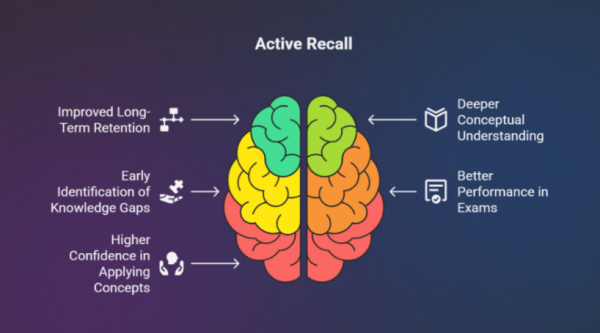
Active Recall Techniques To Use:
Spaced Repetition — This technique involves reviewing material at specific and distinct intervals over time rather than cramming it all at
once. For example, you might review a topic one day after learning it, then three days later, and then a week later (just before the exam). Via making flashcards, this spaced repetition is made easier, as certain necessary information is made more accessible across multiple study
sessions.
Feynman Technique — This method involves choosing a concept and explaining it as if you were teaching it to another student with no background knowledge of the subject at hand. If you struggle to explain any part of the material clearly, it reveals a gap in your understanding that you can rectify. You then return to the material to explain and review it in order to refine your explanation and to fill those gaps in understanding. This technique promotes deep comprehension of the subject matter rather than surface-level learning.
Interleaving — This involves mixing different but related topics within a single study session. For instance, instead of practicing only one type of math problem, you rotate between several types. This forces the brain to recognize patterns and apply the correct strategy, improving problem-solving skills and long-term retention. For those in AP classes, this technique also allows you to more effectively craft FRQ responses which rely on the usage of multiple different yet related topics.
Dual Coding — This technique involves using both visual and visual cues to study. When information is presented both verbally and visually, the brain has multiple pathways to retrieve the information. Creating your own visual representations rather than relying solely on textbooks can make this method even more effective (for those amazing artists at Cal—use your talent!!!)
Student Feelings about Finals:
According to a poll conducted by the Condor Insider, most students struggle more with studying for and completing final exams for STEM-oriented subjects rather than classes involving language and the humanities. This may be because while humanities and social sciences offer the freedom in some cases to express a variety of correct views, STEM-oriented tests generally have questions with objectively correct answers, which may heighten stress during the exam.
With Christmas break so close, some students may also lose focus of their academic performance right before finals, an unfortunate happenstance of the holidays. This may lead to some students’ grades dropping right before Christmas break (a terrible gift to give yourself for the holidays!)
However, despite their importance, it is also crucial to recognize that finals do not define a student’s worth or intelligence. They are only one measure of performance and should be viewed as an opportunity to demonstrate learning rather than as a source of fear. So just try your best, then you can go and rest!