






Context
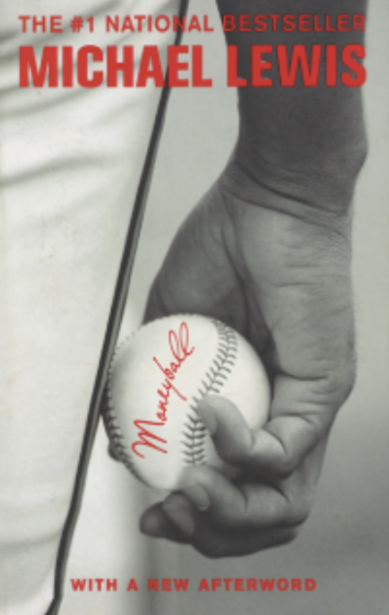
Moneyball spans the 2001-2002 off-season through the 2002 MLB playing season. The book follows the Oakland Athletics and their General Manager, Billy Beane. Billy Beane ran a baseball organization that had a different way of thinking from every other team in the league; the A’s called it Moneyball (using player statistics). The main reason Oakland had to think differently was because they were a small-market team, which means they had less money than big-market teams like the New York Yankees ($126M payroll) and Boston Red Sox ($108M payroll). The Athletics only had a payroll of just over $40 million.
Finding the Solution
After the 2001 season, the A’s lost three of their best players to free agency because their contracts would have cost too much to re-sign. They lost star first baseman Jason Giambi, star outfielder Johnny Damon, and closer Jason Isringhausen. Billy Beane and his assistant GM, Paul DePodesta, had to find replacements for those players that they could afford. Billy and Paul had two statistics that no other team used: on-base percentage (OBP), which is the number of times a batter gets on base by hits, walks, etc and slugging percentage (SLG), which is the total bases per at-bat. During the 2001-2002 off-season, they decided that OBP was 3 times more important than SLG because getting on base (high OBP) produced runs, and OBP was undervalued, which meant that the Oakland Athletics and Billy Beane could afford it.
Getting on Base
The Athletics’ search for high OBP started in free agency. They had to find three players that they could afford and that got on base as much as Giambi and Damon. First, Billy picked up Jeremy Giambi, who is Jason Giambi’s brother; he was a party animal no other team wanted to take a shot on. There was also Scott Hatteberg, a former catcher who had nerve damage and couldn’t throw. They traded for the last guy in, David Justice, who was too old for all the other teams. All three of those guys were undervalued and got on base.
Product on the Field
The A’s had a shaky start to the season; the offense or pitching would go cold and cause them to lose games. So by the trade deadline, Billy made moves and traded Jeremy Giambi. He got traded to the Philadelphia Phillies for John Mabry. Billy also traded for Richardo Rancón, a relief pitcher from the Cleveland Indians, to help with pitching. Also, signing Ray Durham, a second baseman from the Chicago White Sox, to help the offense. Among other moves Billy made to better the team and keep the team under budget was what propelled them to the second-best, most improved half of a baseball season in MLB history, only second to themselves a year prior.
Season’s End
The A’s were in a tight race; they led in the division due to winning the last 19 straight games. The A’s looked as if they would get their 20th win in a row easily as they had an 11-run lead in the 3rd inning. But their bullpen blew it in the late innings. However, Scott Hatteberg, the man who gets on base, hit a pinch-hit walk-off home run to send the A’s home with their 20th straight win in a row. The A’s won the division and claimed a wildcard spot against the Minnesota Twins. The A’s would lose that series in 5 games and be eliminated. The Moneyball experiment failed to send the Athletics to the World Series.
The Games Perspective
The game of baseball never changes too much on its own. Baseball insiders and scouts had archaic ways of thinking, saying things like “the Good Face” or “he’s a 5-tool guy”. Billy opposed that old way of baseball thinking because he was drafted into the big leagues by that way of thinking. He was labeled as a bust when he didn’t perform as expected. Owners and GMs would make mistakes on players (like Billy), overvaluing them arbitrarily. It wasn’t until Billy Beane proved that Moneyball could lead to winning that other team owners and GM’s adopted the strategy for their own teams. Those teams made fewer mistakes, but when the richer teams started operating like small-market teams using OBP and SLG, it left the Oakland A’s having to find a new way to win.