

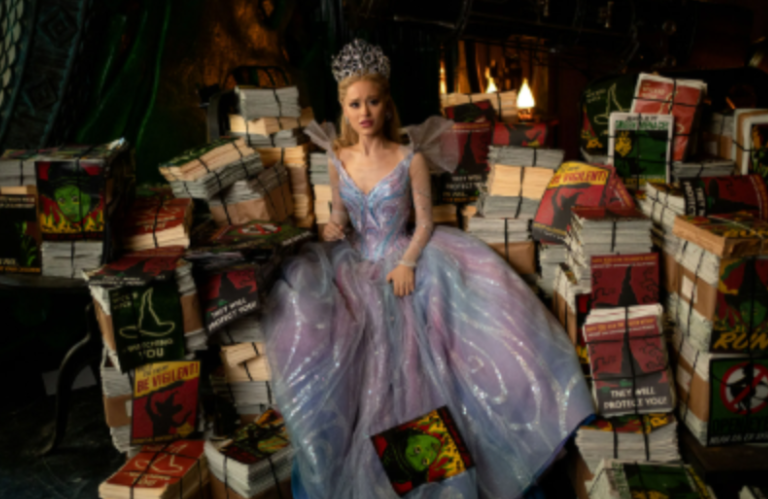
Jon M. Chu’s ambitious adaptation of the beloved Broadway musical, Wicked: For Good, fundamentally struggles to justify its existence as a standalone feature. While Cynthia Erivo and Ariana Grande deliver captivating performances that show true understanding of Elphaba and Glinda, the film suffers from massive pacing issues and narrative padding that feels more like a time filler than an artistic choice. The musical numbers, though vocally impressive, cannot fully compensate for the meandering screenplay that stretches what could have been a compelling single narrative into an exhausting, drawn out experience. Fans of the Broadway musical might find moments of delight, but the cinematic adaptation ultimately feels like a missed opportunity, trading the magic of the original story for a commercially-driven interpretation that leaves audiences more frustrated than enchanted.
With a total runtime of nearly five hours across its two films, the production reveals an excessive length rather than a creatively expanded story. Despite the undeniable magnetism of Erivo and Grande, ‘Wicked: For Good’ ultimately succumbs to the very commercial impulse it seemingly critiques. Jon M. Chu’s directorial approach reveals a fundamental miscalculation: stretching a potentially compelling narrative across two films has exposed the story’s structural weaknesses rather than enhancing its dramatic depth. The film’s padding becomes increasingly transparent, with moments that feel artificially extended, such as the two new songs, “No Place Like Home” and “Girl in the Bubble”, to justify the split release strategy. While the cast’s chemistry and vocal prowess almost compensates for the narrative shortcomings, the overall experience leaves audiences with a sense of unfulfilled potential.
But at the end of the day, the main reason the movie falls flat is the complete lack of any character development. In the stage production, a majority of the development happens during the first act and between the acts. By splitting the show in half, the film is left with static and, frankly, boring characters. Key supporting characters like Boq and Fiyero are noted as being distractingly absent from big third-act developments. The film’s tight focus on Elphaba and Glinda means other characters’ rage or conflicted feelings are not fully expanded upon, making their individual journeys feel unsatisfying within the ensemble picture. As well as the fact that despite the overall slow pacing, some pivotal emotional moments, like the reconciliation between Elphaba and Glinda, feel rushed and “undeserved”. The rapid pace of certain events (Nessarose’s death, a physical fight, followed immediately by the “For Good” finale) can give the viewer whiplash, making it hard to feel the emotional impact or the characters’ actual change in perspective.
The movie squanders its immense potential, with Ariana Grande and Cynthia Erivo’s captivating performances serving as the lone bright spots in an otherwise tepid adaptation. While the musical number “No Good Deed” provides a fleeting glimpse of the spectacular show this could have been, the overall production feels bloated and uninspired, solidifying its place as one of 2025’s most notable film disappointments. The split movie approach reveals itself as a transparently commercial strategy, sacrificing narrative cohesion and artistic integrity for what amounts to a lukewarm, drawn-out money grab.