






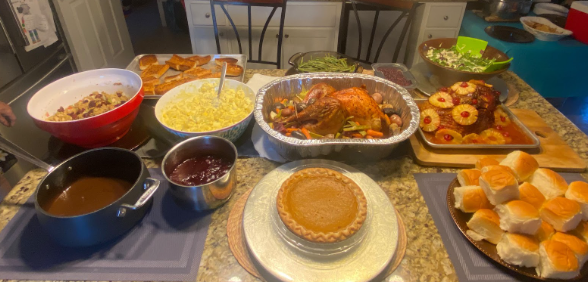
The autumn season has finally begun, and you know what that means — Thanksgiving is right around the corner! With colorful leaves crunching under every step, pumpkin-flavored everything, and of course, the iconic turkey, this is the time of year when friends and family gather for a cozy afternoon dinner and take a moment to appreciate what they’re most thankful for.
Thanksgiving is known for all of these traditions, plus the classic story about the Pilgrims, which many of us learned as kids.
But have we ever really stopped to unpack the true significance of this holiday?
In the early 1600s, the Pilgrims migrated to what is now America in hopes of escaping religious persecution in their homeland. They wanted the freedom to practice their beliefs without fear.
But this journey was far from easy. More than 100 passengers boarded the Mayflower, dealing with cramped quarters, constant seasickness, and unsanitary living conditions. And once they reached New England, things only got worse. They arrived at the very start of winter, struggling to find shelter and food as freezing temperatures led to illness and malnutrition.
By spring, the Pilgrims came across the territory of the Wampanoag tribe. While the Pilgrims desperately needed help, the Wampanoag were understandably wary — the two groups differed greatly in language, culture, and religion. Still, a Patuxet man named Squanto stepped forward. Having a more positive view of the newcomers, he taught the Pilgrimshow to fish, plant corn, forage safely, and master other essential survival skills. Over time, this guidance helped build trust between the Pilgrims and the Wampanoag, eventually leading to an agreement to support and protect one another.
With Squanto’s help and the Wampanoag tribe’s generosity, the Pilgrims produced their first real harvest. Considering how close they had been to having nothing, this success meant everything to them. To show appreciation for both the harvest and the support they received from the Native Americans, the Pilgrims invited Massasoit, the Wampanoag leader, and his men to join them for a feast. This celebration — lasting around three days — is what we now consider the first Thanksgiving. Unlike the meals we associate with the holiday today, their feast included five deer brought by the Wampanoag, seafood like mussels, lobster, eel, and clams, plus geese, wild turkeys, vegetables, berries, and nuts.
Over time, this piece of history has been retold, reshaped, and sometimes overlooked. While the exact details of the
first Thanksgiving remain uncertain, the heart of the celebration was meant to honor friendship, hope after hardship, mutual respect, and the blending of cultures. So let us be glad, let us be grateful, and raise a toast to yet another Thanksgiving feast.